What Ultra High Performance Concrete Is at Its Core
Material Intelligence, Density, and the Future of Architectural Expression
Ultra High Performance Concrete (UHPC) is often described in terms of strength. While its exceptional compressive capacity and durability are defining characteristics, they do not fully explain the material’s significance within contemporary architecture and design.
At its core, UHPC represents a shift in how concrete is conceived - from a coarse structural composite to a densely engineered mineral system capable of precision, longevity, and refined spatial expression.
Understanding UHPC requires moving beyond performance metrics to the underlying principles that govern its microstructure, behavior, and architectural potential.
A Densified Mineral Matrix
Traditional concrete relies on a heterogeneous blend of aggregates bound together by hydrated cement paste. UHPC, by contrast, is formulated through a process of optimized particle packing, where fine powders and supplementary cementitious materials are combined to minimize internal voids.
The resulting microstructure is significantly denser and more uniform.
This densification leads to:
substantially increased compressive strength
reduced permeability to water and environmental contaminants
improved resistance to cracking and surface degradation
enhanced dimensional stability during curing
Rather than functioning as a granular composite, UHPC approaches the characteristics of a continuous mineral matrix, allowing for greater control over both performance and appearance.
Particle Packing and Structural Efficiency
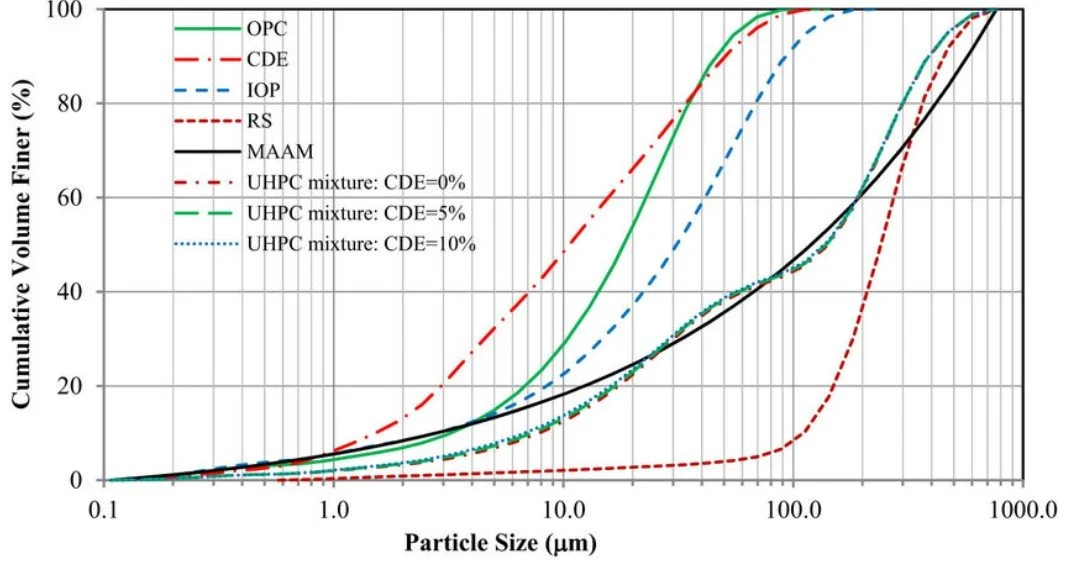
One of the most fundamental principles behind UHPC is particle packing - the strategic arrangement of particles across multiple size scales to maximize density.
Instead of relying on large aggregates for strength, UHPC uses finely graded powders and sands to create a tightly integrated internal structure. This densification improves load transfer and structural efficiency while reducing internal stress concentrations.
For designers and fabricators, this translates into:
the ability to produce thinner, more refined elements
improved geometric precision
reduced risk of void-related defects
consistent material behavior across complex forms
In this sense, UHPC demonstrates that performance can be achieved through material intelligence rather than material excess.
Pozzolanic Reactivity and Long-Term Performance
Supplementary cementitious materials, often referred to as pozzolans, play a critical role in the development of UHPC’s dense microstructure. These materials react with by-products of cement hydration to form additional cementitious compounds over time.
This secondary reaction contributes to:
continued strength development beyond early curing stages
reduced permeability and enhanced durability
improved chemical stability
greater resistance to long-term degradation
The inclusion of pozzolanic materials reflects a design philosophy oriented toward longevity, aligning UHPC with broader movements in architecture that prioritize enduring material performance over short-term efficiency.
Fiber Reinforcement and Tensile Behavior
Unlike traditional concrete, which performs poorly under tensile stress, UHPC typically incorporates micro-scale fiber reinforcement to enhance ductility and crack resistance.
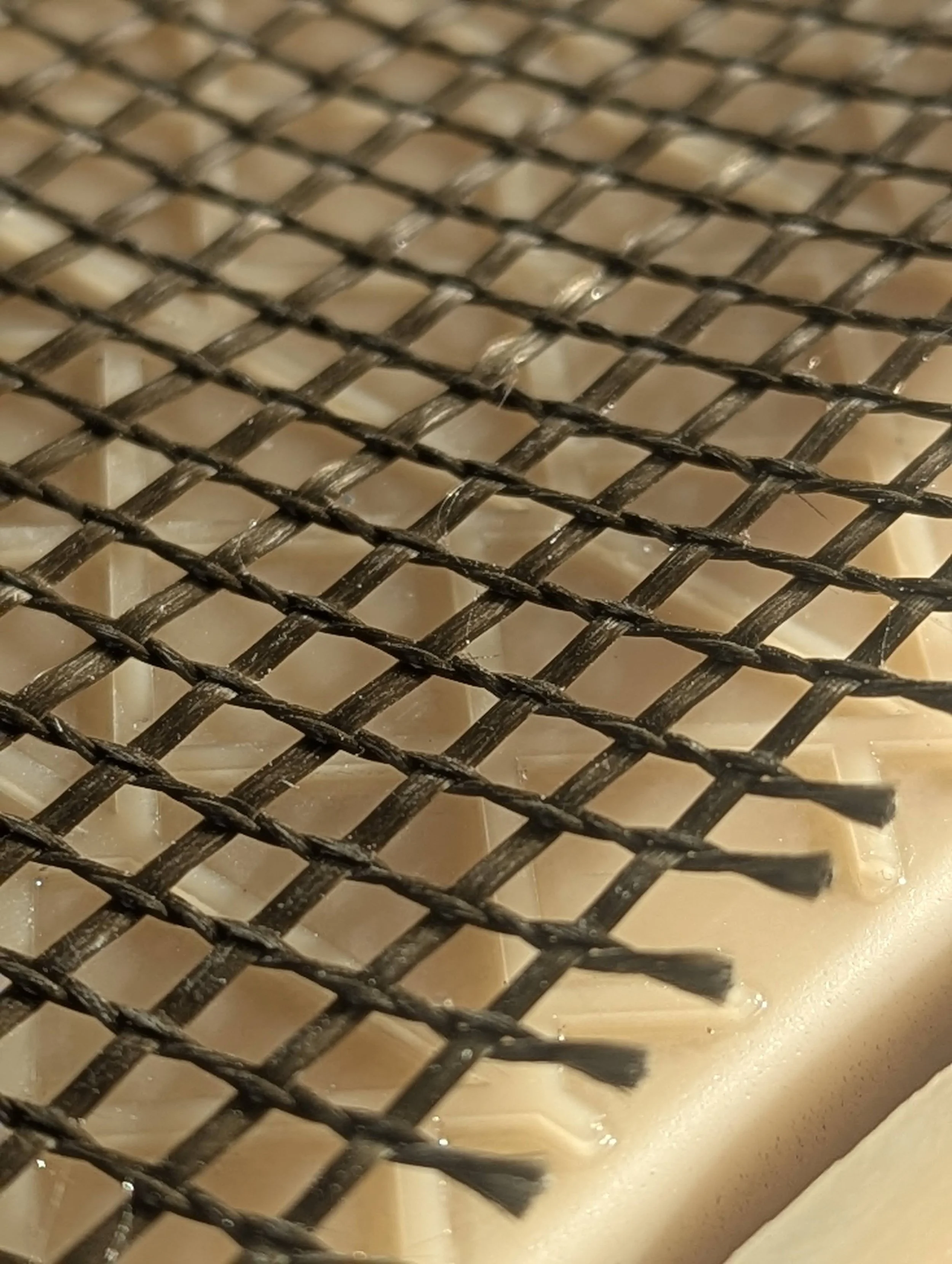
These fibers facilitate:
controlled microcracking rather than brittle failure
improved flexural performance
long-term structural resilience
expanded design possibilities for thin or cantilevered elements
This shift fundamentally alters how designers can engage with concrete, enabling applications that balance structural discipline with formal refinement.
Surface Expression and Architectural Clarity
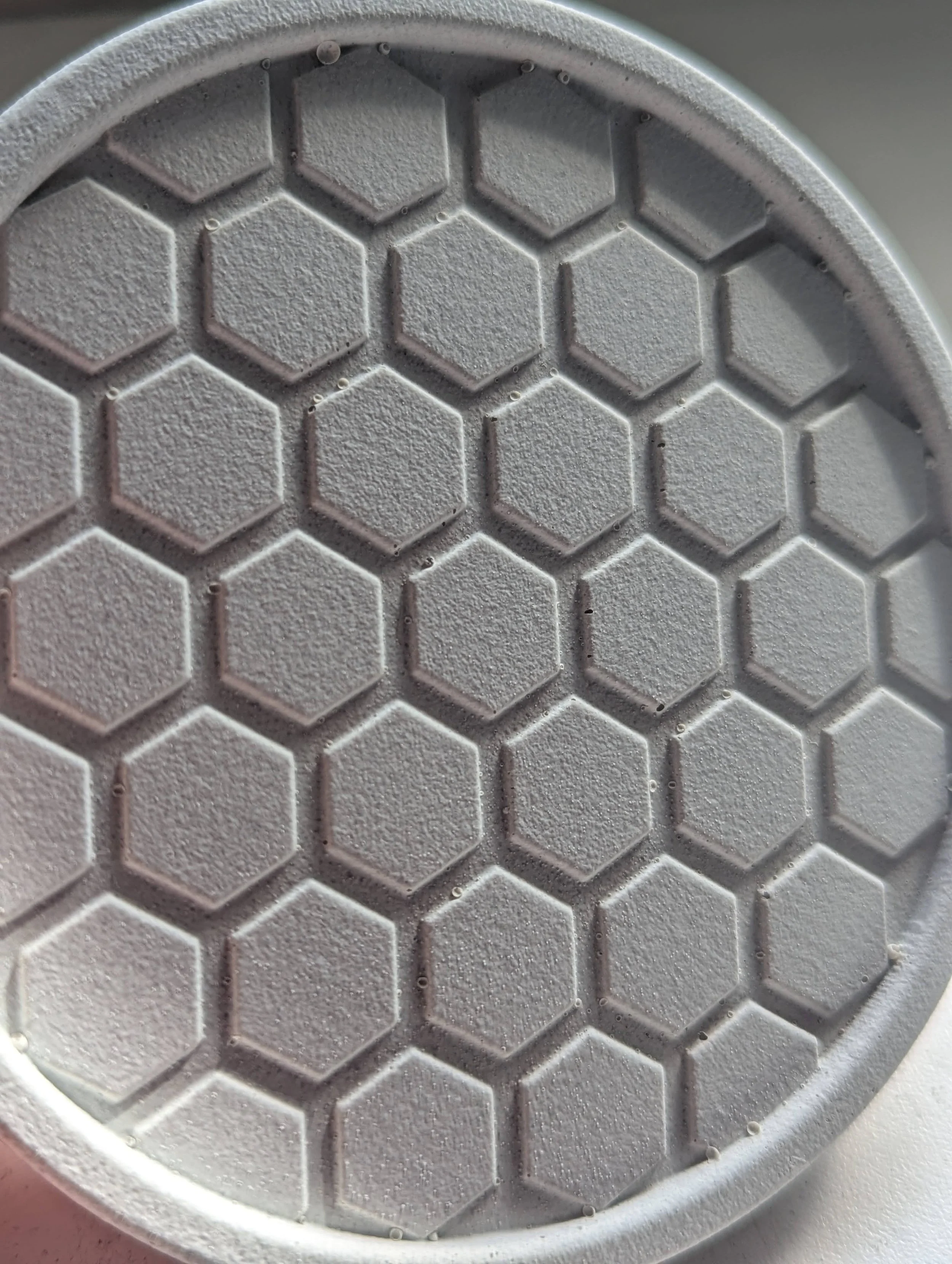
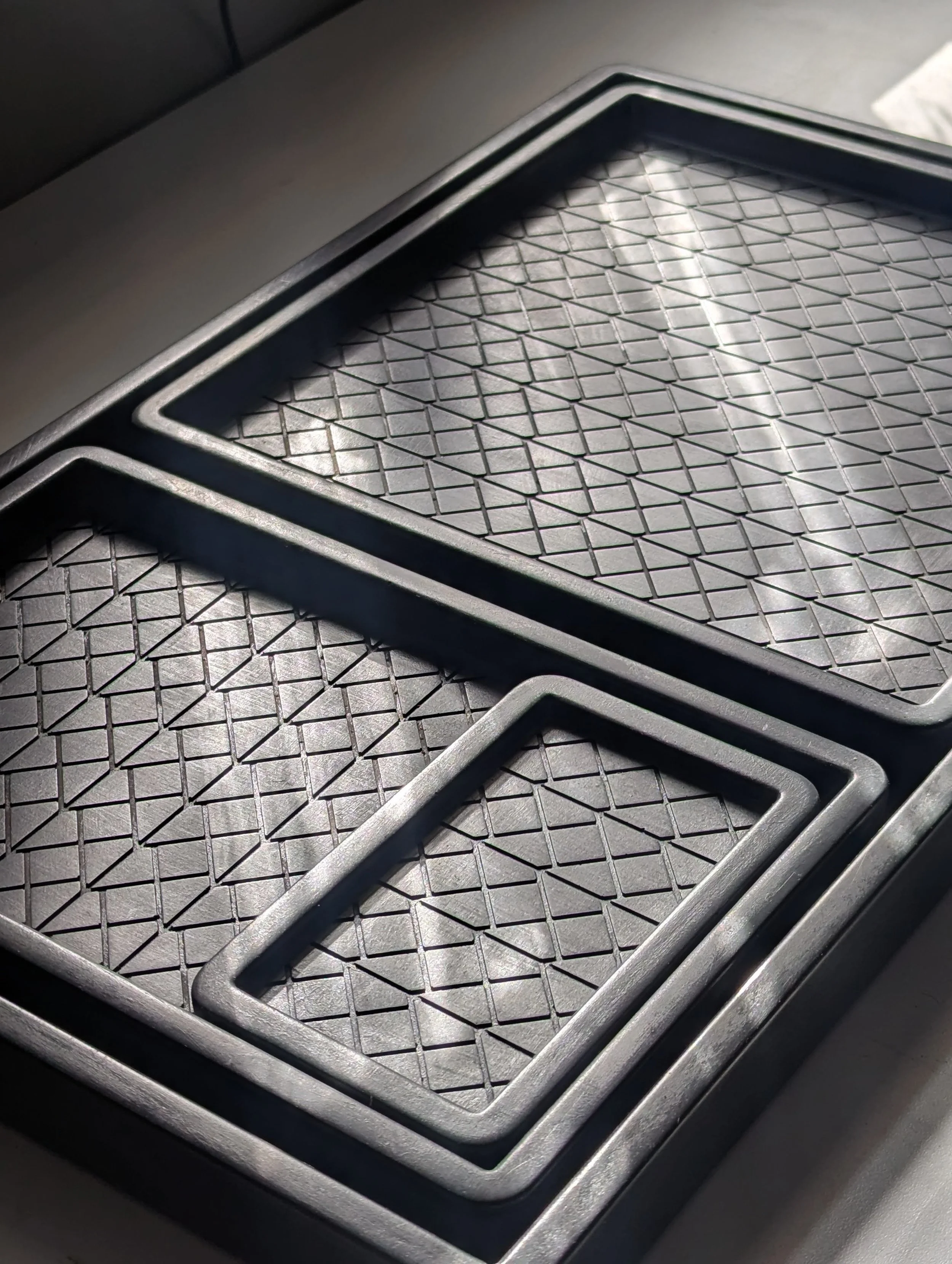
UHPC’s dense composition and flow characteristics allow it to reproduce fine textures and maintain crisp edge definition. When cast under controlled conditions, the material can exhibit subtle mineral variation while retaining visual consistency.
For architects and designers, this enables a form of expression defined by:
geometric precision
restrained minimalism
tactile depth without visual noise
continuity between structural and sculptural intent
As a result, UHPC often occupies a space between building material and design medium.
Longevity as a Design Principle
The performance characteristics of UHPC contribute to its alignment with contemporary design philosophies that prioritize permanence and material authenticity. Its resistance to environmental deterioration supports the creation of architectural elements and objects intended to endure over extended lifecycles.
This durability reflects a broader cultural shift toward slow design and investment-oriented material culture, where longevity is understood as a defining attribute of quality.
The Expanding UHPC Ecosystem
The advancement of Ultra High Performance Concrete has been shaped by a diverse network of material developers, fabricators, and technical specialists. This expanding ecosystem has played a significant role in transitioning UHPC from a specialized structural solution to a more accessible medium for architectural exploration.
Companies such as Trinic and Kodiak Pro contribute to the broader dissemination of ultra high-performance cementitious technologies, supporting experimentation across a range of design scales.
As knowledge surrounding particle engineering, fiber reinforcement, and curing methodologies becomes more widely shared, designers and smaller studios are increasingly able to engage with UHPC in ways that were previously limited to large infrastructure or façade applications.
This evolving landscape reflects a material culture in transition - one where engineering innovation and design intent are becoming more closely integrated.
UHPC as a Material Philosophy
Ultimately, UHPC is not defined solely by its mechanical properties. It represents an evolution in how mineral materials are conceptualized, fabricated, and experienced within the built environment.
By enabling precision, durability, and expressive restraint, UHPC supports a design approach grounded in discipline, permanence, and material clarity.
Understanding UHPC at its core means recognizing it not simply as an advanced form of concrete, but as a medium capable of shaping the spatial and temporal qualities of contemporary architecture and design.
